What Your Injector Is Legally Allowed To Do
What Your Injector Is Legally Allowed To Do
You sat down, you filled out a form, and someone came at your face with a needle. Did anyone ever actually examine you?
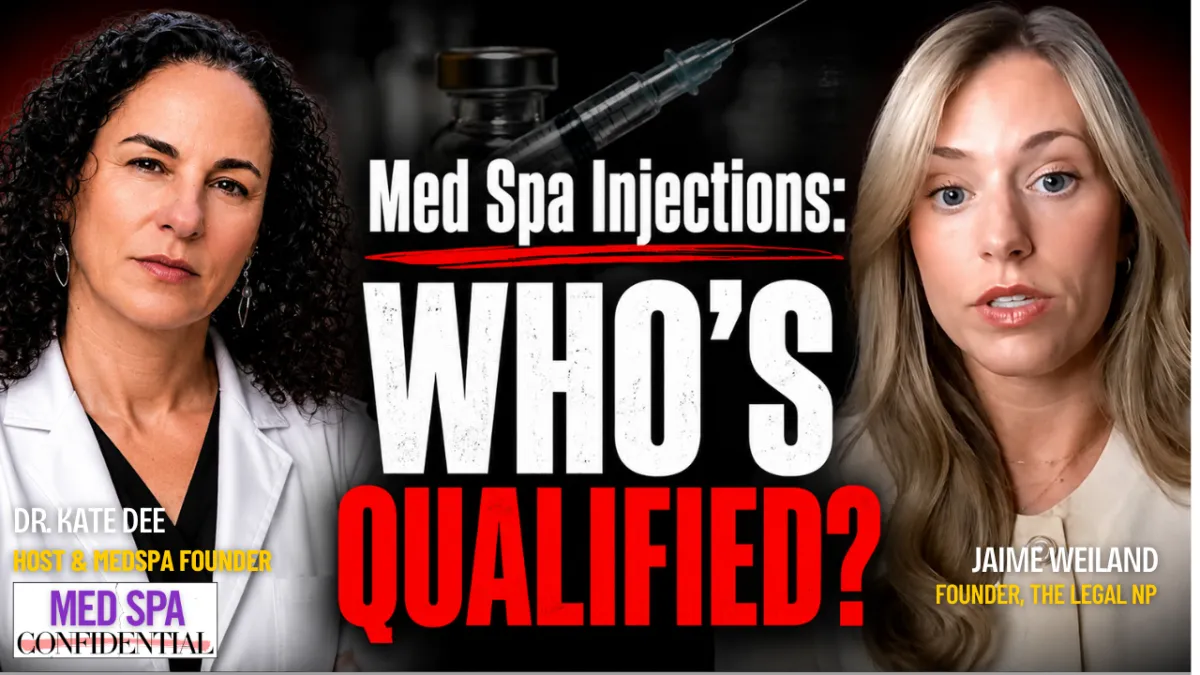
I sat down with Jamie Weiland, a nurse practitioner in Texas who goes by The Legal NP. She reviews the cases that end careers and leave patients disfigured. What she told me about scope of practice in med spas confirmed something I've suspected for years. A lot of what looks like medical care is really just paperwork wearing a lab coat.
Five Minutes And A Signature
"A registered nurse cannot practice independently at all, in any state." - Jamie Weiland, Med Spa Confidential
Before you get Botox or filler, someone with prescribing authority has to do a good faith exam. That's the assessment, the history, and the plan. An RN legally can't do it. An NP, a PA, or a physician can.
So what happens in a clinic staffed only by RNs?
Usually a telehealth call, and often it runs three to five minutes at most. I tried doing remote consults myself during COVID and found them completely inadequate. I needed to see people's skin. I needed to look at them a lot more closely than a laptop camera allows. A lot of those telehealth companies don't specialize in aesthetics either, so they aren't really assessing for it.
In the episode, Jamie explains where the law is heading on this and why it will take years to get there.
Skill Is Not Knowledge
"Just because you possess a skill doesn't mean you necessarily possess the knowledge that surrounds it." - Jamie Weiland, Med Spa Confidential
This is the line I keep coming back to. You can learn to inject in a weekend, and Texas in particular is full of courses marketed to anybody. You learn the technique, you open an Instagram account, and you start selling it as a thing.
But knowing how to put filler in isn't the part that matters. Knowing what to do when it goes into an artery is. That means understanding the facial anatomy and its variations, recognizing an occlusion within minutes, and having the drug on hand to reverse it. That kind of pattern recognition takes years, and there's no shortcut for it.
When I first learned filler, I was sweating. It still makes me sweat. Really smart, highly skilled injectors have hit the facial artery and caused massive disfigurement.
The Signature Proves Nothing
"The signature doesn't matter. The signature proves that the patient signed a piece of paper." - Jamie Weiland, Med Spa Confidential
Lack of informed consent is the number one lawsuit I see in medical aesthetics. Jamie reviews these cases, and she keeps finding the same gap. There's a beautiful consent form drafted by a lawyer, and then nothing in the chart showing that anyone ever said the words out loud.
Consent is supposed to be a conversation about the procedure, the benefits, the risks, and the alternatives, including the alternative of doing nothing at all. A form the front desk hands you, or one that got sent to you ahead of time, doesn't cover any of that.
I can't tell you how many patients have come to me for filler after having it many times somewhere else, and I'm the first person to ever mention vascular occlusion to them.
Before Your Next Appointment
Ask two questions. Who did my assessment, and did that person see me in person? And who do you call when something goes wrong?
If the second question gets you a blank look, you already have your answer. Every practice should have a plan and a phone number ready. For me, that means two oculoplastic surgeons I'm close friends with and can text if I ever need them.
There's one more thing we require at the Med Spa Board before a clinic touches filler, and the number surprises a lot of the medical directors I interview. Listen to the full episode of Med Spa Confidential to hear it.