Is Letybo ‘Korean Botox’ Worth the Hype?
Is Letybo ‘Korean Botox’ Worth the Hype?
You've probably seen it all over TikTok. "Korean Botox is better." "Faster results." "The next big thing in aesthetics."
But is any of that actually true?
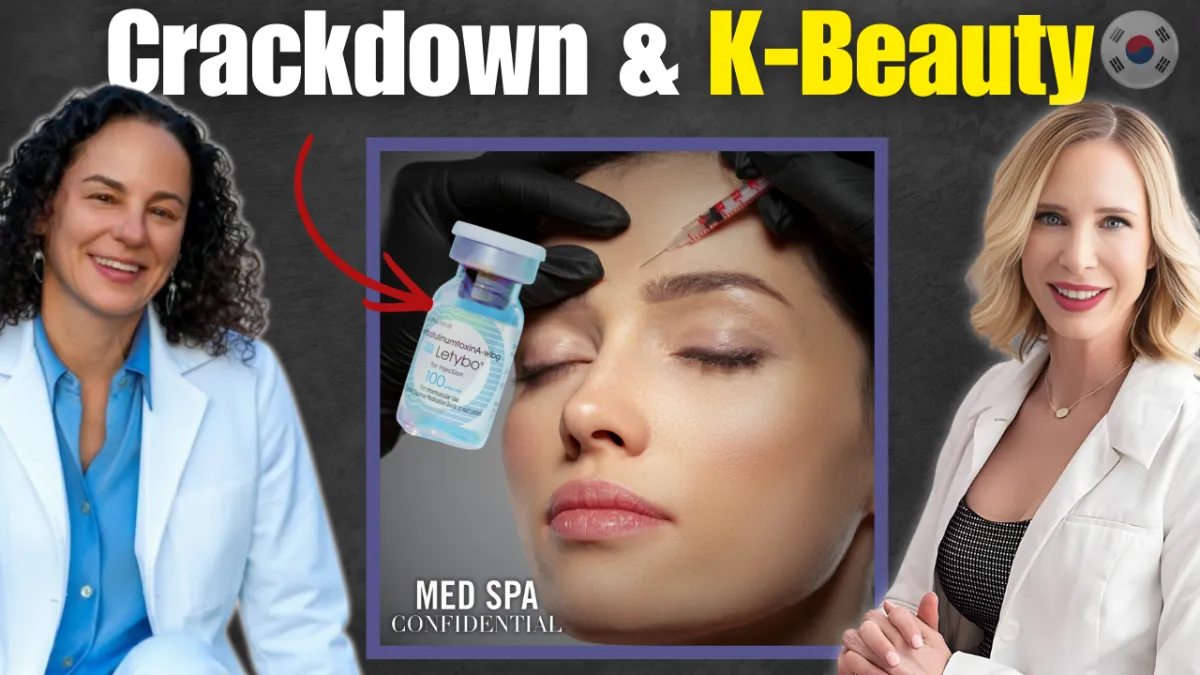
I sat down with Dr. Judith Borger, a physician with over a decade of experience in aesthetic medicine and one of the newest Med Spa Board certified providers in North Carolina. We talked about Letybo, the FDA-approved Korean neurotoxin making noise in the industry, and what the science actually says versus what the marketing wants you to believe.
The Korean Beauty Wave Is Real. Sort Of.
"K-beauty has taken over in the creams and the serums. But when it comes to injectables, the story is different." — Dr. Judith Borger, Med Spa Confidential
K-beauty has genuinely changed the skincare aisle. Walk into any Target or Sephora and you'll find Korean serums, sheet masks, and glass-skin moisturizers everywhere. That part of the wave is real.
But injectables are a different conversation. Letybo went through the full FDA approval process. It's not a gray-market product. It's not counterfeit. So if your provider is offering it, the product itself isn't the concern.
What concerns me is the buzz. When something gets hot on social media, providers start stocking it before they fully understand it. And consumers start requesting it because an influencer said so. That's where things get tricky.
What the Science Actually Says
"It's so similar to Botox. It is ridiculously similar." — Dr. Kate Dee, Med Spa Confidential
Here's my honest take as a scientist. The active part of every FDA-approved neurotoxin is the same protein. What differs is the coating around it, how it's formulated, and how much active toxin is actually in the vial.
Letybo does appear to have a slightly faster onset. Dr. Borger has seen that in her patients, and I don't dispute it. But the claims about lasting significantly longer? I'm skeptical.
Once a neurotoxin causes that nerve-muscle disconnection, your body starts rebuilding those connections on its own timeline. Nothing sitting in a syringe changes your biology six months later.
I've pushed reps on this directly. The answers are never satisfying. And if your provider can't explain the science behind what they're injecting into your face, that's a problem worth taking seriously.
Why Your Provider's Loyalty Program Matters More Than You Think
"These companies will definitely influence the choice of toxin that people offer." — Dr. Kate Dee, Med Spa Confidential
This is the part most consumers don't know about. Allergan, Galderma, and other manufacturers run loyalty programs for providers. The more you buy, the cheaper it gets. So when a provider switches products, there's often a financial reason behind it, not just a clinical one.
That doesn't make it wrong. But it means you deserve to ask why your provider switched. A good provider will tell you. A great one will explain the science behind it.
For providers, this is worth examining honestly. Are you recommending Letybo because the data supports it for your patients, or because a rep you like brought it to you?
Before Your Next Appointment
If someone is about to inject your face, you deserve to know exactly what's in that syringe, where it came from, and why they chose it.
The med spa industry is changing fast. Arrests are happening. Standards are shifting. And the providers who can't answer basic questions about the products they use are exactly the ones you need to avoid.
This episode of Med Spa Confidential will change how you think about every appointment you book. Dr. Borger also shares what happened when a colleague's certification application revealed a safety gap that could have hurt someone in a real emergency. You need to hear this.
Transcripts:
[00:00:00] Dr. Kate Dee: How do you know the person about to inject your face is actually licensed to do it?
[00:00:04] Dr. Kate Dee: across the country. Right now, providers are getting arrested Most of their patients never saw it coming. So today I sit down with Dr. Judith Borger, a physician with over a decade of experience in aesthetic medicine who just got her North Carolina practice, med Spa Board certified, and has a lot to say about what is driving this wave of arrest. We're getting into the Korean version of Botox too.
[00:00:27] Dr. Kate Dee: Letybo, what the science [00:00:30] actually says and whether the hype is real. You need to listen to the end because Dr. Borger shares what happened when her colleague's application revealed a safety gap that in a real emergency could have actually hurt someone. So let's get into it.
[00:00:42] Dr. Kate Dee: Hi, this is Dr. Kate Dee and I am back today with Dr. Judith Borger.
[00:00:47] Dr. Kate Dee: So, Judah, thanks so much for being on the podcast today.
[00:00:52] Dr. Judith Borger: I am so excited to be back.
[00:00:54] Dr. Kate Dee: so first of all, there's been this spate of arrests. I mean, it's, and actually I'm [00:01:00] kind of excited to see that 'cause, for, you know, the 12 or so years almost that I've been doing this. There haven't been very many, you know, and, and I've, we've just been watching more and more and more illegal spas pop up and like.
[00:01:14] Dr. Kate Dee: Who's doing anything about it? Right. So, so tell me, like, what, what have you seen and what kind of inspired you to kind of join the med spot board?
[00:01:22] Dr. Judith Borger: Yeah, I mean, I, I completely agree. You know, not that I love people getting arrested, but I do like the idea [00:01:30] that the medical boards and the authorities are really sort of finally stepping in because I think there was a lot of turning blind eyes to a lot of things. So, You know, as I said, I wish nobody harmed, but it was really actually patients that were getting harmed.
[00:01:46] Dr. Judith Borger: So I do think that it's kind of hopefully ushering in a little new era where maybe compliance is a little bit more on the forefront and doing things legally. [00:02:00] And so, you know, yes, there's been this whole arrest and I think right, when we really think about what these arrests are, they fall under different cap.
[00:02:09] Dr. Judith Borger: Categories, right? So of course there's this like the egregious kind of arrest that everybody would agree that are completely illegal, where people were going to somebody's backyard shed or somebody's hotel room or in the back of some, you know, a nail [00:02:30] salon or something. And I think that's sort of category one, right?
[00:02:33] Dr. Judith Borger: Where really most probably fairly conscientious consumer should be like, wait, is this really what should be happening? That this person like wants to see me in their kitchen?
[00:02:45] Dr. Kate Dee: the second part I think are, what I'm really seeing is a gross category. And I think this is where the Mepa board really comes in is a lot of arrests recently about misrepresentation, right? Where [00:03:00] people were pretending to be licensed when they weren't, where people were pretending their establishments were licensed when they weren't.
[00:03:08] Dr. Judith Borger: But I think really that it was sort of. Practitioners either, either practicing outside of their scope of practice, outside of their license, or without a license while pretending that they were a proper kind of med spa. And then there was even some high end cases where things were done wrong. So I think that's [00:03:30] kind of where things like the MedSpa Board really come in, which does a great job really.
[00:03:37] Dr. Judith Borger: I would almost say being like a SEAL or standard for the highest quality of care that you know, by being MedSpa board certified. And by getting MedSpa board certified, we're kind of saying to our current patients and all of our future patients and clients, Hey look, we are really adhering to this highest [00:04:00] standard and you don't have to worry because you know we are.
[00:04:03] Dr. Judith Borger: Really doing the utmost in excellence and care, in oversight in sourcing and being able to deal with complications. So that really, as a, especially I think, boutique physician-led med spa, that has always prided itself in quality and. Highest sort of standards. It's like wonderful to kind of have a formal [00:04:30] seal or formal way to quantify that and show it to the world.
[00:04:34] Dr. Judith Borger: And I'm hoping that it will build a lot of trust as we grow this or as you grow this, with patients that can really recognize it and sort of say. Hey, look, this is MedSpa board certified, so I don't have to worry if somebody unlicensed practice is there, if they use illegal Botox, if even just like oversight isn't being given.
[00:04:58] Dr. Kate Dee: I think. [00:05:00] Having a uniform standard and a uniform badge, you know, that's really easy to identify. Okay. Meds Spa Board certified. People can identify that really quickly. It is really hard. So people have asked me, you know, okay, so these are all the questions that I need to ask. You know, what if they answer this?
[00:05:17] Dr. Kate Dee: What if they answer that? And I will tell you, I personally, when I've tried to figure out whether a spa is legit or not. It's about a 15 minute phone call, right? To, for me to ask the front desk enough questions to [00:05:30] figure out whether people actually have the right credentials and if there's a medical director and stuff.
[00:05:35] Dr. Kate Dee: And, and so having that badge will be just easily identifiable. Like, oh, okay, they're certified. And I think that that also, you know, that will bring in more patients, you know, who, that's what they want. They're coming to you because. You know, you are safe and you're offering really high end services that are, you know, vetted and [00:06:00] careful.
[00:06:00] Dr. Kate Dee: And, and I mean, there are so many things, for instance, for example, in my place that I won't offer because they're too risky and they're so common out there, but it's my license and my sleep at night that I would lose if I were offering any of these things. And like a lot of these places offering that, it's like.
[00:06:19] Dr. Kate Dee: There's no one with any medical knowledge to know how risky that is, and you know, even if it's, you know, one in a hundred. You know, risk. That's a lot. How many patients do you [00:06:30] see in a week? More than that. So like, you know, can you imagine harming people that often, so like, this should be a symbol where people will be able to recognize like, okay, you know, it doesn't guarantee results.
[00:06:42] Dr. Kate Dee: I think that's like a big thing also for me as like, as part of this, you know, is it's not like you're guaranteeing that you're gonna love the results or you're gonna get, but it really is a guarantee that the people there. Actually care about the safety and the quality of the care that they're [00:07:00] giving,
[00:07:00] Dr. Judith Borger: And, and I think most of us would actually probably think in the worst case scenario, that that is way more important, right? You'd rather need to come back for another syringe of something than like have. Permanent harm or disfigurement because really safety should be so important. And, and the other thing that I'm also hoping is that as it grows, that people see it also as a way, like you said, to search for people.
[00:07:26] Dr. Judith Borger: Like for example, you know, I have my friend who's [00:07:30] now in, you know, a town where I know nobody who's saying, you know, I wanna get some fuller don, or I wanna get a laser treatment done. And instead of her finding the person with the most TikTok followers. Is to actually like find a person where I can safely say, you know, this looks like a very good reputable place.
[00:07:48] Dr. Judith Borger: Why don't you try them out?
[00:07:50] Dr. Kate Dee: Right. And I have to say, so you know there are groups, you and I are both part of a group of doctors who do this, and a lot of times we will pose a question [00:08:00] to the group. Like, Hey, my patient's moving to California. Is anyone in the Bay Area who could see this patient? And that way, you know, you're referring to somebody, who you can trust.
[00:08:10] Dr. Kate Dee: And I think in this way, this will be a way to bring that to the public to be able to just show people. and so like, I think like if you break, I mean if you break it down. To trust safety and money. It's kind of a win-win, you know? I mean the example of safety, I, [00:08:30] I have to like, tell you about this debate I had once.
[00:08:32] Dr. Kate Dee: This was with, another med spa person who had a ablative laser that they did very aggressive ablative resurfacing. And I was like, well. That's so risky. And they're like, yeah, but you do one big ablative, you know, very, and then you're done. One and done. And I'm like, well, but, but then you've got all these people who might have scarring and hyperpigmentation and other issues that are coming back.
[00:08:56] Dr. Kate Dee: I mean, it's not, you're not done with some subset of those people. And if I [00:09:00] were that patient, I wouldn't want that. Right. Whereas if you do. a non-ablative resurfacing, that's much, much safer, much less downtime. Sure, you need three of them, but I personally would rather have three of them than go through one.
[00:09:13] Dr. Kate Dee: if you asked the person with the permanent scarring, they would agree, right? Like again, like they're like probably initially it sounds great, one and done, but then if you ask the person that has the scar or that has the hyperpigmentation, they're probably like, look, instead of having this forever,
[00:09:29] Dr. Kate Dee: Like, I wouldn't [00:09:30] do this again.
[00:09:30] Dr. Judith Borger: to come back two more times.
[00:09:32] Dr. Kate Dee: And I would never wanna be the person who did that to them. And the thing is
[00:10:00]
[00:10:21] Dr. Kate Dee: that if you don't know the risks, and if you're not, or if you're not managing your own complications, then like you don't know. and, and so everyone has a different risk tolerance, but I [00:10:30] think that, you know, one of the signs of quality, I'm not, you know, the med spa board doesn't tell doctors what to do. It doesn't tell the med spot how to practice, but they make sure that, that it is properly managed. And, you know, there's a medical director who's actually caring about these things.
[00:10:50] Dr. Judith Borger: Mm-hmm.
[00:10:50] Dr. Kate Dee: and then, you know, at least, you know, there's somebody who has medical judgment, helping to make these decisions. And it's not just commodity driven [00:11:00] because a, a lot of, illegal places, you know, they're buying, Cheap knockoffs because they can't buy the real thing. 'cause the real companies won't sell to them. Right. So it's even more dangerous because they're not using the real device, you know? and there's just so much more risk in that. So I gotta ask you, since you just went through this process not that long ago, like how long did it take you to fill out the application?
[00:11:23] Dr. Kate Dee: How long did it take to actually go jump through those hoops?
[00:11:26] Dr. Judith Borger: Yeah, I mean, it, it really did not take me [00:11:30] very long. I ha I'm gonna be full. Transparent with all the listeners. I did have a little glitch with my username and password that took a couple emails to resolve, but once that was resolved, so because I also don't want to like paint a picture of like, oh yeah, it's everything.
[00:11:43] Dr. Judith Borger: So once I had my username and password issue resolved, it was really a one sitting kind of write it all down. I just had to get everybody's licenses from my office manager who keeps that all handy. You know what I really appreciated, and I'm gonna mention a colleague of mine here who also got [00:12:00] certified.
[00:12:00] Dr. Judith Borger: You know when you and I talked, you reviewed our application, like it did not. You know, everything passed. We went right through. But what I really appreciated was how good of an experience she had. And she had a little too little hyaluronidase and she really said to me like, I really appreciated how Dr. D like sat down with me and we made a plan of exactly what we needed.
[00:12:25] Dr. Judith Borger: So, you know. I would say for me it was very fast to [00:12:30] do the application because we had all of our things handy and binders and folders like file somewhere, as, as you, as you should. But sometimes, you know, again, the more people you have, the harder it gets to find. But I, I really wanna point out how my colleague really founded a very educational.
[00:12:46] Dr. Judith Borger: Experience, even though she initially had like a shortcoming in one of the sections. So I think I also want to kind of say that to people that might be scared that like, what if I don't pass? Like is people, are people gonna report [00:13:00] us? That? She really commented on how supportive she felt like you were and how it really elevated her in that one area that she didn't meet right away to elevate her standard of care.
[00:13:13] Dr. Judith Borger: To what is really best practices because she truly, you know, being a newer practitioner was not aware like how many vials, again, I was like, I think I have 24 vials or some insane number. Like right. But she was like, oh, I didn't know I needed more than
[00:13:28] Dr. Kate Dee: Well,
[00:13:29] Dr. Kate Dee: all, [00:13:30] all you need to have is, is have one event when you realize you'd rather have that safety net. Knowing that you might use that many, I mean, we require 16 at least. and and the interesting thing is that like, first of all, there's no punishment for not getting that. You know, there's zero punishment, right?
[00:13:49] Dr. Kate Dee: So if you're like, oh gosh, I gotta do this or that, like, I didn't realize, that that was best. No big deal. Order. Order. A few more vials, I mean. [00:14:00] People realize it, it is expensive, right? So we're talking about hyaluronidase, which is used to treat a vascular occlusion. It's also used to do touch-ups. If you have something, you wanna adjust that and, but yeah, that's used in much smaller amounts for a touch-up.
[00:14:14] Dr. Kate Dee: Right? I had one, person who is inquiring, who has not applied yet. But what she said is, well, I have four friends in the general area, or it was either they had four locations or they had four, I think it was four friends.and they [00:14:30] each had four vials of Hyaluronidase each. So if we really needed it, we could get it.
[00:14:35] Dr. Kate Dee: And I'm like, okay, that's not how this works. When the, when
[00:14:41] Dr. Judith Borger: One is a Sunday afternoon and one of
[00:14:42] Dr. Judith Borger: them is at the beach and the other one is at the baby shower, right? And
[00:14:45] Dr. Judith Borger: you really need to dissolve this and this time tissue.
[00:14:48] Dr. Kate Dee: This is happening to you. You do not wanna get in your car and drive around town begging people for Hylenex. You really just need it in your fridge so you can treat it right away. And so that's why I said, I was like, you know when this does [00:15:00] happen to you?
[00:15:00] Dr. Kate Dee: And it's very rare. So I mean. We've had one ever in the history of my office. it was recognized right away. It was treated right away, but I think we went through 12 or 13 vials of Hylenex X that that time. And you don't wanna try to be stingy with it, right? So anyway, the, the, the point is though, that.
[00:15:21] Dr. Kate Dee: We're here to make sure that patient safety is number one, right? And so, and there's no punishment for, for not,
[00:15:29] Dr. Judith Borger: Well, and that's kind of what I [00:15:30] wanted to bring up, right? Because I don't want people to feel like, oh my God, like if there's one thing on the form, like it's not a, like, you know, we always worry about this with like the medical board. It's a board, but it's a friendly board. And the idea is really to make everybody be very safe.
[00:15:45] Dr. Judith Borger: So I, I just, that's why I really wanted to bring out my friend who, you know, really felt like it was a very supportive and educational part, even though on her initial. Application. She did fall short on one thing. It's not like the [00:16:00] medical board that are gonna suspend you. It's really an idea that, you know, you are creating a standard as the MedStar board that helps elevate everybody.
[00:16:08] Dr. Judith Borger: And that hopefully that standard will become the gold standard. And you know, people are gonna aspire to that. And also we have some consistency, right?
[00:16:17] Dr. Kate Dee: Yeah, and I, I thought that we as a group. We came up with some really good national standards. It's the same everywhere. I mean, obviously corporate practice medicine laws are different [00:16:30] in the different states. And then, and then there is, there is a difference between about half the states allow nurse practitioners to practice independently, half don't.
[00:16:39] Dr. Kate Dee: So that, that's fine. Like I, I'm not enforcing anything. I'm just like, that's fine. You can totally be, but if you're a nurse practitioner in a state where you can't practice independently, then you absolutely have to have. A, a supervising or collaborating physician, that's just the law, right? But other than that, there's, there's no, there's no difference [00:17:00] really.
[00:17:00] Dr. Kate Dee: and, and so you can expect the same level of, of quality, transparency, safety, that emphasis anywhere that's certified and, and, so it's, it's a pretty easy process to go through.and I agree. Finding your, so the thing though is that also it's helpful because if you have to write down everybody's license number, well you're certainly gonna find out if one of them let their license lapse.
[00:17:26] Dr. Kate Dee: So, you know, and that, and that [00:17:30] happens like, and even, even me, like I, I did not let my license lap, but my, my manager texted me not that long ago, like. Hey, it looks we have an old license for you can, and I was like, of course I re of course I did that, but the one they had laminated in the office wasn't the new one.
[00:17:46] Dr. Kate Dee: I'm like,
[00:17:46] Dr. Judith Borger: Well, that's, that's exactly what I think. What took me the longest is to remind my office manager being like, and I did it at the end of the year, being like, Hey, you know, per protocol, at the end of every year, we're supposed to ask every single one of our [00:18:00] practitioners to give us a copy of their new license.
[00:18:02] Dr. Judith Borger: Have you done that? And, and have they responded, you know.
[00:18:05] Dr. Kate Dee: And that since it's part of the application and, and you have to renew every year, you just have to update your information every year. Like we're just kind of part of that same process you have to do anyway. and so, you know, our hope right as we launch, you know, as we get bigger, is that that national directory gets more attention.
[00:18:26] Dr. Kate Dee: That we are able to, you know, link with as many spas. [00:18:30] That are, you know, operating at that high level as possible. and that we can elevate the whole industry. Like that's, that's my goal. And, and I, I'm not looking for all these places and people to get arrested. I think having an actual board with standards will actually help those people who don't know, like, who are not really operating legally to realize, well, huh, I can't get certified.
[00:18:55] Dr. Kate Dee: I don't meet any of those. That's, it might at [00:19:00] least even educate some of them or prompt them to either become legal or stay within the scope of their practice. I mean, you know, so my hope is to have a positive influence on this, in both directions, you know, and educate the public. So like the public understands.
[00:19:17] Dr. Kate Dee: What these places are doing, because, you know, all the public sees mostly are the headlines of, several women arrested in Florida, in Arizona, and apparently in North Dakota just [00:19:30] recently. it's just, rather than throwing our hands up, we can do something about it.
[00:19:34] Dr. Kate Dee: Right.
[00:19:35] Dr. Judith Borger: Yeah. And I think that was, I mean, I think that's like when I looked through some of the recent cases that I could find, and of course there's so many of them, unfortunately, you know, a lot of those, including the one in North Dakota was people pretending to have licenses when they don't. Right. And, and like you said, the, the problem with that is a, they couldn't even get Met Spa Board certified, but like, like you mentioned earlier, you know, a lot of the.[00:20:00]
[00:20:00] Dr. Judith Borger: Safe and direct to med spa products. Like we have to give our DEA license. We have to give our license. So it creates this whole spiral where then even if they wanted to, they could not even buy true products. They, they have to almost buy the black market, counterfeit, whatever, because the Allergan, Galderma, they're not gonna sell to them.
[00:20:23] Dr. Judith Borger: And so it creates this whole cycle that. You know, really, really unfortunate, really, for the [00:20:30] consumers in the end.
[00:20:31] Dr. Kate Dee: so someone asked me recently about the Korean toxin and is it gonna take America by storm?
[00:20:38] Dr. Judith Borger: You mean Letybo?
[00:20:40] Dr. Kate Dee: that's what I said. I was like, you mean Letybo? I don't know about by storm, but, my question to you is, do you use Letybo?
[00:20:47] Dr. Kate Dee: Do you like it? what's your take on it?
[00:20:50] Dr. Judith Borger: Yeah. You know, we do use Letybo. I use it in my practice and it, it is actually popular. [00:21:00] Because it's fast onset. Right. And you know, we have talked about this whole ktox wave and K beauty and you know, K beauty is kind of taking the US by storm, but only sort of, right. Because I think when I really think about K beauty and you think about the sales numbers.
[00:21:21] Dr. Judith Borger: A lot of the, the way K beauty has taken over, it's really in the creams, in the serums that you can now buy at [00:21:30] Ultra, at Walgreens, at CVS, at Target, at Sephora. That really, I think, in the sort of consumer skincare brand. Business. K Beauty is like what, a $2 billion industry. And I just recently read that.
[00:21:46] Dr. Judith Borger: Don't quote me on that number that, K Beauty has, the US has overtaken whatever was, I think France before that was the top importer of, ca Korean skincare that they have now [00:22:00] overtaken, which is really remarkable, especially given the tariffs and the other economic climate. So I think. You know, Korean beauty is huge.
[00:22:09] Dr. Judith Borger: it also seems that the like home gadget market. That is very, like Korean beauty focus has really exploded. But interestingly enough, I don't really know that like the Korean products as far as devices and injectables have [00:22:30] really overtaken sort of the US market. Now. That being said, I have used Letybo for probably close to a year now.
[00:22:39] Dr. Judith Borger: you know, we like it. We. I think again, because there was this huge push towards all the Korean skincare and, and honestly a second reason is, and, and you know, this is also how we make decisions. The rep that now reps, it was one of my like. reps that I've had a relationship with for a decade [00:23:00] and, you know, they all jump companies, so some of it is also that like rep relationships are important and so she was like, you know, try Letybo and, you know, it is a fast onset.
[00:23:11] Dr. Judith Borger: you know, it's, it's normally about a good day faster than what you would get with your traditional Botox. So people like it. Has it even an our practice taken a huge share of the market? No. It's just like the next new thing that we're offering. that being said, I, I don't know how big of a [00:23:30] market share they have.
[00:23:31] Dr. Judith Borger: I mean, I think that's kind of what happens is whenever a new toxin that gets launched, nationwide comes out, they grab a piece of the market share. But I think by no way are they dethroning some of the heavy hitters. Such as Allergan and Galderma and, you know, the top toxins in the market. And I think as more and more, you know, toxins become available, first of all, I think not all of us are gonna carry all of them because it's just gonna get too crazy to have [00:24:00] like all the different brands who we're gonna have to choose.
[00:24:03] Dr. Judith Borger: And then I think, you know, the, the slice, unless they do vary. Good direct to consumer marketing. You know, it's hard to create a big buzz, when really I think it's still a medical procedure, which is why I think direct to consumer has kind of taken off more because there's apparently a million, like again, driven by TikTok.
[00:24:25] Dr. Judith Borger: Mainly there's a million leg, little electro wand [00:24:30] gadgets. Are K beauty that are now apparently a huge market, mainly driven through influencers and social media and direct to consumer selling. But I, I honestly don't know that the Korean even like, you know, laser brands or injectable brands have really like made that big of a dent in the US market as far as I know.
[00:24:54] Dr. Judith Borger: What, what do you think
[00:24:55] Dr. Kate Dee: Well, I, I think that's a really, so let me, let me just stick to Letybo for one second [00:25:00] here and, and. So from my point of view, the, the toxin, the active part of the toxin is the same for all of the, all of the approved toxins. Okay. So, so Botox is the first one. And, and so as they've come out, they've had different qualities compared to Botox.
[00:25:17] Dr. Kate Dee: And so from my point of view, every new one that's come out, I compare to Botox. And if I think it's a little better than Botox, I will offer that.but if it's not as good as Botox [00:25:30] or about the same and the same price, I won't. I just don't bother. Right. So in my office we have Botox and Dysport because when Dysport came along, I thought I really liked it better and, and I, I was at a lecture a number of years ago now that was comparing all the toxins and how they're all the same two unit.
[00:25:51] Dr. Kate Dee: protein, that ha has the active part of the toxin, right? And they all have a different protein coat around them. And whereas Xeomin has [00:26:00] no protein coat, but the rest of them all have different size protein coats And when you put it in solution, the protein coat floats away and you're, and you're just, how much of that toxin is in the vial?
[00:26:11] Dr. Kate Dee: And at this lecture, they were saying, you know, the, the, the amount by weight of the two, you know, subunit, active toxin was highest for Dysport in the vial. And then next was Botox. Then Juva is almost the same as that. Dxi is almost the same as [00:26:30] that. And then Xeomin was the lowest. And, and that's basically how long it lasts, is how much is in there.
[00:26:36] Dr. Kate Dee: So, you know, that's why Dysport lasts a little longer. It's a little fast. That's what, that's my opinion. There's, that's, and I, you know, I learned that from this lecture, and that's been my experience. So when Juva came along, everybody was like, eh, it's about the same Xeomin. Most people feel that it doesn't.
[00:26:53] Dr. Kate Dee: Last as long. Some people argue with that. No. So with, with Letybo, I kind of, my prep [00:27:00] for this was to do like a deep dive on the, the science of it. And it's, it's so similar to Botox. It's ridiculous. It is ridiculously similar. So the amount of toxin is the same. so when you read online, people are selling it, that it acts a little quicker and lasts a little longer maybe.
[00:27:18] Dr. Judith Borger: Well, I think we have seen the little bit faster onset. I mean, I, I gotta say that's something that patient has commented on and I think it does have to do that. A lot of the newer ones are [00:27:30] like, again, they have fewer side chains, and so maybe they do
[00:27:33] Dr. Judith Borger: penetrate into the. The enzyme and block acetylcholine a little bit faster.
[00:27:39] Dr. Judith Borger: you know, and then of course, depending on when your tier status is with Allergan. I think the advantage to some practices is also that some of the smaller brands, like the volumetric discounts for smaller practices, unless you're like top tier status with Allergan, is a little bit more advantageous of course, [00:28:00] because they're smaller, they're launching,
[00:28:02] Dr. Kate Dee: Well, that's what I, I wanted to mention that, so I'm glad you brought that up because I think a lot of consumers don't know that, that that loyalty program with these different companies will definitely influence, the choice of toxin that people offer. Right. So Allergans, Botox, and they have a loyalty program, kind of like a frequent flyer program.
[00:28:24] Dr. Kate Dee: So the more you buy, the less expensive it is and you know the nicer they are to [00:28:30] you. right. And so, so Galderma makes Dysport same deal, right? And so if you are a heavy user of either of those companies or the other companies, your discount's pretty decent. So you know, it, it costs you less. So if you transfer a big volume of, of, of your, Patients to a new product from another company, then it's very possible your price of those things will go up if you really change that significantly. So there [00:29:00] is a big heavy influence of these companies to like, keep using their product and, you know, so that's why I really try to use just the si the, the real scientific thing.
[00:29:12] Dr. Kate Dee: Like is it better than Botox? Okay. it's, if it's inferior, I don't wanna use it. That doesn't
[00:29:17] Dr. Kate Dee: make sense. But if it's the same and cheaper, mm. You know, why not? I mean, basically there's no advantage that the Korean company, I mean, it's pure, it's safe, it's not contaminated, it's not [00:29:30] weird, you know?
[00:29:30] Dr. Kate Dee: So is it hype about K Beauty? I personally would use it interchangeably with Botox. I, I mean, I don't think the Koreans. Know anything different, you know, than any other scientific lab. It's a pro, it's a protein, you know? and then you just have to figure out like, you know, can you afford to, to switch?
[00:29:49] Dr. Kate Dee: Can you know how it's a business decision? Which again, like I'm a a, I try not to drive my medical decisions by, you know, a, a business thing. But as a [00:30:00] consumer, I think you should feel very confident to get either one.
[00:30:02] Dr. Judith Borger: Yeah, I agree. I mean, and I think that's a really important thing to to mention, right? We have heard a lot about fake products coming from Asia, Korea, China, Russia, wherever. This is not the same. Like this is a product that was developed in Korea, has been used throughout Asia, but they went through the whole rigorous, you know, FDA approval, which [00:30:30] is a big, rigorous kind of thing, right?
[00:30:32] Dr. Judith Borger: And they got approval and so, you know. Again, I agree with you that, you know, business decisions shouldn't sue us, but then we all have to have a profit to stay open and have a mission and like, right. No money, no mission. and you know, what I've actually started doing is that, you know, because.
[00:30:51] Dr. Judith Borger: Because we have, we offer quite a few different tox, so we are not, we're probably best here with Galderma and we actually use a lot of [00:31:00] Xeomin. And the reason is, for us is a me is in North Carolina, so there's some sort of loyalty to them. And then the fact that it was the first one that was really purified our very like.
[00:31:12] Dr. Judith Borger: How do I say this? Health conscious, want everything natural patients with all the Gwyneth paltry marketing feel very confident being injected with the, you know. Toxin, you know, that goes along with the baby's
[00:31:27] Dr. Judith Borger: amber teething necklace. you know what I mean? That [00:31:30] is sort of the one with the fewest like accessory, potentially immunogenic proteins.
[00:31:37] Dr. Judith Borger: So for that reason, Xeomin at least where we are, has actually pretty good following, which kind of makes sense.that they would take a little bit more natural look and a little bit of movement as the trade off to feeling like they get injected with the most purified
[00:31:55] Dr. Kate Dee: you know, as a scientist, I'm like, that's a nice notion, but it's, it's [00:32:00] still botulism toxin. It's the same.
[00:32:02] Dr. Judith Borger: I, I completely agree.
[00:32:03] Dr. Kate Dee: it's, and, and although it is true that, you know, Botox has more, proteins on it, so more potential for immunogenicity, but. I've not seen any data actually, to say that it actually is the causing,an immune response antibodies to the toxin.
[00:32:25] Dr. Kate Dee: that's very, very, very rare. And it does happen to Xeomin [00:32:30] also. And I've never seen anything where it says it happens more with any of the other toxin. So I, and it, and back when I did trial Xeomin, and this is ages ago, I had a patient who had. you know, an immune response to Botox, and she wanted to try Xeomin, and, and she had the exact same response to Xeomin.
[00:32:48] Dr. Kate Dee: It wasn't fun. so I was like, okay, you know, I, I don't
[00:32:52] Dr. Judith Borger: I, I agree with the scientists in you and in the practitioner in me. I just validate the patient's journey [00:33:00] and their concerns about the potential for high inflammation and extra foreign products, and we just support them in the decision in choosing the talks that they want.
[00:33:11] Dr. Kate Dee: Well, I think we've, we've covered Letybo now, so that was, that was really interesting. I'm gonna bring up a, a new, product from Galderma. Have you heard, and I have no idea how to pronounce it. Relfydess or
[00:33:25] Dr. Judith Borger: I have not.
[00:33:26] Dr. Kate Dee: my rep had told me about that, I wanna say at least two years ago. I mean, [00:33:30] it's been a long
[00:33:30] Dr. Judith Borger: Well, I mean probably I'd heard
[00:33:32] Dr. Judith Borger: like, like things about that. It was like a theoretical thing, but I did not know that it was a like ready to market kind of like thing.
[00:33:42] Dr. Kate Dee: so what it is, it's a brand new neurotoxin, so it's not the same as Dysport. It's a, it's a new one
[00:33:47] Dr. Kate Dee: and It's it's
[00:33:49] Dr. Kate Dee: RelabotulinumtoxinA toxin a and it comes as a liquid and it's gonna be in prefilled syringes. And it's actually already available internationally in 20 different [00:34:00] markets. And it is very close to being FDA approved.
[00:34:03] Dr. Kate Dee: In the United States, they have been jumping through all the FDA hoops, which, you know, as you know, takes years. and so recently the most recent hoop was this month. and I don't know my, I suspect it's gonna be very soon. And the interesting thing is that it's supposed to be much faster than all the other neurotoxins, I guess.
[00:34:22] Dr. Kate Dee: 'cause it's, it's form in the liquid, I'm not sure. and it's supposed to last six months.
[00:34:28] Dr. Judith Borger: And it's supposed to have an injectable as [00:34:30] well, right?
[00:34:30] Dr. Kate Dee: It is an injectable. It's just preci, prefilled in syringes. You won't need to, reconstitute it. And so I, I know not much more than that other than it's already popular in Europe and other places. And I just think, you know, there's constant innovation. There's constantly new things and you know, and of course as a scientist, I, I'm very interested in the actual.
[00:34:55] Dr. Kate Dee: Molecule and the science of it. but then, you know, anything that's new and different and interesting, it's [00:35:00] like, well, what advantage is there? How much does it cost? You know, how much is faster? Is one day is
[00:35:06] Dr. Judith Borger: How much is that worth? Right. That's also the question, like how much is one day worth like, right. Because chances are it's probably gonna be more expensive and it'd be more expensive to ship for sure, because it'll be heavier.
[00:35:19] Dr. Kate Dee: Right. So I, it's just interesting 'cause we don't know, we don't know enough. It's just, it's coming down the pike. You heard it first, hear people.
[00:35:27] Dr. Judith Borger: I know. You're like, I feel so unprepared now. [00:35:30]
[00:35:31] Dr. Kate Dee: well
[00:35:31] Dr. Kate Dee: I know I had heard about this, that it was coming, but you know, these things sometimes take forever. It was like waiting for Sculptra to get its new, FDA approval that took, I don't know, like eight years or something at least, and it's like, well, when am I, you know, can't sit around waiting for that.
[00:35:48] Dr. Judith Borger: No that you say it. I do think a couple years ago I kind of heard inklings and then nothing ever happened. Right. But like you said, you're a scientist, you know? And, and I'm too, I mean, I've been part of a whole bunch of [00:36:00] FDA trials as a principal investigator and so it's actually really interesting, you know, you being a scientist and.
[00:36:07] Dr. Judith Borger: Like, you know, I've spent so much time on the trial front to actually always look at how, where the outcomes actually derived, what were the methods that were used, like to really dig to that level of an approval or a new indication. And because that all makes the difference too, in the data that we got.
[00:36:28] Dr. Kate Dee: yeah. Yeah. So, [00:36:30] well, I'm, I'm excited. I'm looking forward to this, at least to try it. You know, see if it lasts that long on me.
[00:36:36] Dr. Judith Borger: Yeah. Well, because honestly, like, you know, like Dify initially came out promising that sort of duration and, and to be honest, in my practice we never got that, those
[00:36:48] Dr. Kate Dee: so,
[00:36:48] Dr. Judith Borger: fulfilled.
[00:36:49] Dr. Kate Dee: so here's my skepticism there. once the neurotoxin. Causes that paralysis, that connection is lost between the, the nerve ending and the [00:37:00] muscle. Okay, that's gone. It, it, it retracts. And so over time your body sends out new little connections and over time they, they reconnect.
[00:37:09] Dr. Kate Dee: and eventually that muscle gets to turn on again. Okay, so. I do not understand how anything in the vial or in the syringe is gonna change your biologic activity inside your body six months from now. I don't understand how that's possible. And honestly, when DFI came out, [00:37:30] I'm really annoying to the reps and I was like, I wanna talk to your chief scientific officer.
[00:37:34] Dr. Kate Dee: So they, they sent me. You know, person and I'm like, so tell me how does that do that? And all they could tell me was, oh, well there's different proteins in the vial and that, you know, blah, blah, blah. It changes its activity. And I'm like, okay, there's different proteins in the vial. You put it in today, four or five, six months from now, those proteins are somehow preventing those connections to come back.
[00:37:58] Dr. Kate Dee: I don't, that's not. [00:38:00] Reasonable. Right. That doesn't make any sense. Right. So I am curious about this new thing. Is it, what is it about it? Is it, could it really last longer? Is it just a higher dose? Which is possible. I don't, I don't know. So I'm, I'm very curious. I'm, I'm excited, but I'm always asking those questions.
[00:38:17] Dr. Kate Dee: And I think also, you know, just to get back to our, you know, med spa board thing. Is that if you have a geeky science person like me, who's your, your medical director, right? They're gonna ask [00:38:30] these questions and they're gonna be able to deliver to you services that have been, you know, vetted. If, if you have someone who just believes whatever the rep tells them, which believe me, they do not tell the truth most of the time.
[00:38:42] Dr. Kate Dee: Okay? and doesn't know what questions to ask 'cause they don't know the physiology of how this happens. Then they're just gonna buy it and sell it to you and tell, tell you the sales pitch that the rep told them, who's not even a medical person. Right. So there are other big, you know, kind of overarching advantages to [00:39:00] have, you know, someone.
[00:39:02] Dr. Kate Dee: Who, who's asking those questions. So, so that's why I think, you know, for anybody who's still listening to us at this moment, I think that, you know, consider getting Meds Blood board certified and join us and help change the industry. And if you are a consumer, you know, ask those questions. Make sure that there's an actual medical director and make sure everybody's licensed or look for the Med Spa Board certified, badge.
[00:39:29] Dr. Kate Dee: So,
[00:39:29] Dr. Judith Borger: [00:39:30] Yes.
[00:39:32] Dr. Kate Dee: and Judith, thanks so much for, for getting certified and talking about your pr, your process with me. I really appreciate your talking with me today.
[00:39:40] Dr. Judith Borger: I appreciate having you back on and hopefully, you know this is gonna spread the way it's supposed to and I can't wait to sort of hear and see and watch the new evolution of it. So thank you for doing like what you do also for the industry and for patients and for practitioners by really helping them deliver the best care to their [00:40:00] patients.
[00:40:00] Dr. Kate Dee: Aw, thank you.
[00:40:01] Dr. Kate Dee: If you found this helpful, do me a favor and share it with a friend who's considering any aesthetic treatments. Subscribe so you don't miss the next one and drop a comment telling me your biggest takeaway. I actually read them all. Let's keep each other safe and elevate the standards in the MedSpa industry.