Hundreds of MedSpas New Jersey Could Be Shutting Down Soon
Hundreds of MedSpas New Jersey Could Be Shutting Down Soon
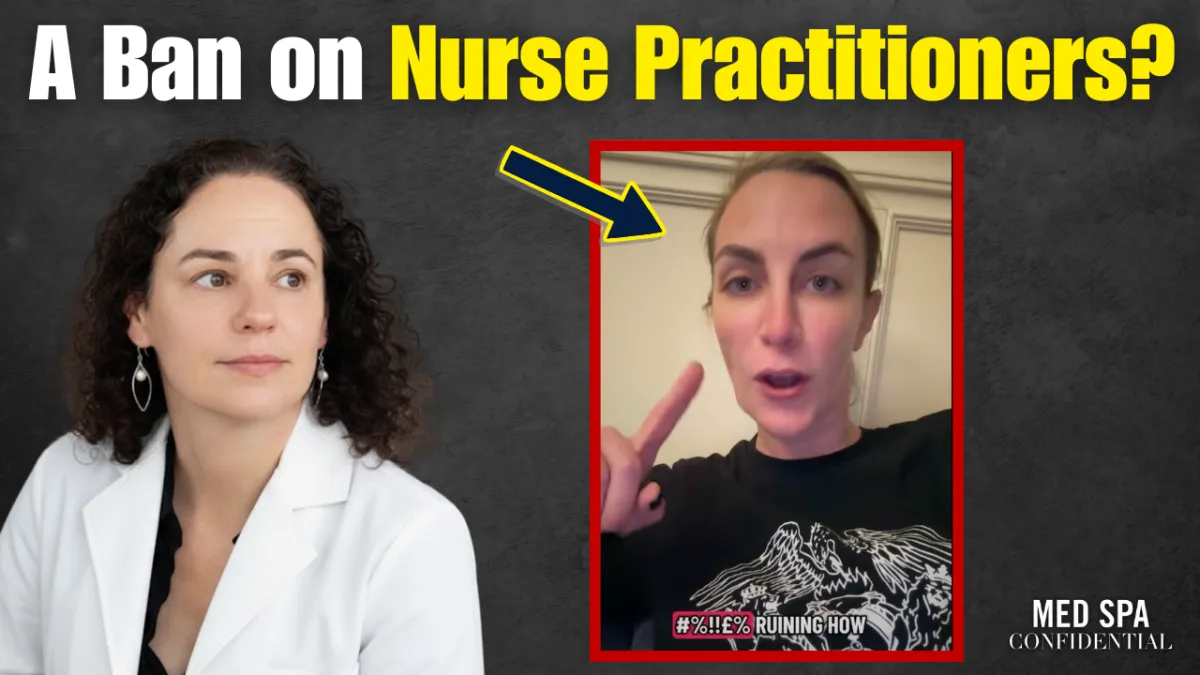
A nurse practitioner in New Jersey just posted a furious video saying the new state regulations are "ruining how I feed my family." She's upset because she now has to work under a physician. Her exact words? She'll have to "sign over all of the ownership to a physician who's never gonna see you, never gonna talk to you, and treat you."
I understand the frustration. But there’s a lot to unpack here.
For the past six years, New Jersey allowed nurse practitioners to operate med spas and IV bars with zero physician oversight. It was a COVID emergency measure. Temporary from the start. A lot of practitioners took that window and built entire businesses on it. And now that window is closing.
The anger is real. The financial pressure is real. But so is the fact that this was always meant to end.
When Temporary Becomes Permanent
"The governor of New Jersey recently signed an executive order ending a previous executive order that was enacted during the 2020 COVID pandemic." — Dr. Kate Dee, Med Spa Confidential Podcast
Twenty-eight states allow nurse practitioners some level of independent practice. New Jersey used to be one of them during the pandemic. But as of January 16th, that executive order ended. Now practitioners have 30 days to find a supervising physician or shut down.
Thirty days is tight. Especially if you've been operating independently for six years and suddenly need to restructure your entire business model.
But here's the thing. The law didn't change. It reverted. New Jersey is going back to what was always on the books before COVID. And while I absolutely understand why practitioners feel blindsided, the temporary nature of that order was never a secret.
What This Means for Patients
"A lot of nurse practitioners went out and set up new businesses doing aesthetics and IV bars, and that executive order has been in effect for just about six years now." — Dr. Kate Dee, Med Spa Confidential Podcast
If you've been getting Botox, fillers, or IV drips at a med spa in New Jersey, you might be wondering what this means for you.
It doesn't mean your injector isn't skilled. It doesn't mean nurse practitioners can't deliver excellent care. Many do. But it does mean the legal structure they were working under is changing.
The frustration in that video wasn't about patient safety. It was about business disruption. And I get it. But those two things shouldn't be in conflict.
The Paper Medical Director Problem
"As of January 16th, that executive order was ended and New Jersey's laws are reverting now to what they were before the COVID pandemic." — Dr. Kate Dee, Med Spa Confidential Podcast
The nurse practitioner in that video said she'd have to bring in a physician who won't see patients. That's the fear. That oversight becomes a formality instead of a partnership.
And that's a legitimate concern. Paper medical directors are a real problem in this industry. Doctors who sign off on businesses but never show up. That's not what supervision should look like.
But the solution isn't to eliminate oversight. It's to demand real oversight. A medical director who reviews cases, trains staff, and is available when things go sideways. That's what patients deserve. That's what ethical practitioners want too.
Before you book your next appointment, ask: Who's the medical director? Are they involved in patient care or just on the paperwork?
The answer will tell you whether your med spa is compliant or just checking boxes.
Before Your Next Appointment
This story isn't simple. A lot of nurse practitioners built legitimate businesses during a temporary legal window. Now that window is closing faster than anyone expected.
Thirty days isn't a lot of time. I won't pretend it is. But the law is the law. And patient safety can't take a backseat to business convenience.
Listen to the full episode of Med Spa Confidential to hear the full breakdown of what's happening in New Jersey, why this matters nationwide, and what it means for both patients and providers trying to do the right thing.
Episode transcripts:
[00:00:00] ivsbytheseas: I just wanna take a second to say thank you so much, Phil Murphy for fucking ruining how I feed my family and my business. I opened post COVID. we were operating under an executive order in which nurse practitioners did not require a collaborating physician.
[00:00:14] ivsbytheseas: a collaborating physician in the state of New Jersey does nothing except collects a paycheck. I basically have to sign over all of the ownership of the medical part to a physician who's never gonna see you, never gonna talk to you and treat you because that's New Jersey state law.
[00:00:29] ivsbytheseas: I really don't [00:00:30] see us being open much longer.
[00:00:31] Dr. Kate Dee: A lot of nurse practitioners and probably some PAs are pretty upset in New Jersey right now. Hi, I am Dr. Kate d. And I'd like to explain what's going on and why there is so much consternation and why potentially a, a lot of med spas in New Jersey are about to shut down. So as of this recording, it is now close to the end of January, and the governor of New Jersey, recently signed an [00:01:00] executive order ending a previous executive order that was enacted during the 2020 COVID pandemic.
[00:01:07] Dr. Kate Dee: So during the pandemic. As many of you will remember, it was really hard to get medical care and New Jersey changed some big rules in order to allow nurse practitioners and PAs to operate independently in order to take care of primary care patients. They also actually allowed people who had licenses in other [00:01:30] states.
[00:01:30] Dr. Kate Dee: To practice in New Jersey, even if they didn't have a license in New Jersey, so that they would be able to have visiting people. A lot of people went to New Jersey. It was kind of the epicenter of the pandemic in the beginning. A lot of people went there to help out. My best friend from, high school was a physical therapist in one of the, major hospitals in New Jersey that was just inundated during that time.
[00:01:55] Dr. Kate Dee: So I got a lot of stories back then about what it was like in the hospital. So [00:02:00] imagine the world when, you know, everything's falling apart, everybody's sick, and we just don't have enough medical providers to take care of them. So New Jersey enacted this law, and as a byproduct of that. Nurse practitioners and physician assistants were allowed to practice primary care independently.
[00:02:17] Dr. Kate Dee: now I didn't know that that law has been, you know, basically that executive order has been in effect for just about six years now. and so first of all, what are nurse practitioners and [00:02:30] PAs, many of you will know this, but nurse practitioners are registered nurses who go on to get an advanced nursing degree.
[00:02:39] Dr. Kate Dee: So they're, they're more than just registered nurses. They can, make, you know, more decisions. They have more training and more education. physicians assistants go to school for two years. It's like a master's level degree. Both of these, um, degrees are master's level degrees, basically two year degree.
[00:02:57] Dr. Kate Dee: There's no additional residency or training for [00:03:00] them. But usually what happens is they get a job in a certain area and then they get lots of experience and training on the job. there are currently, as of today's recording, 28 states that allow some degree of independence for nurse practitioners.
[00:03:16] Dr. Kate Dee: Some states allow complete independence and other states. Um, have a kind of more collaborating physician law. and, and the other states you cannot practice independently at all. You have to be under a doctor. [00:03:30] Now whether nurse practitioners can practice independently, that is a fraught topic and we'll get to that.
[00:03:37] Dr. Kate Dee: and, uh, there's quite the turf battle affecting that. So in 2020, those changes were made and,As of January 16th, that executive order was ended and New Jersey's laws are reverting now to what they were before the COVID pandemic. practitioners have 30 days to comply [00:04:00] with. the old regulations.
[00:04:02] Dr. Kate Dee: So why are so many people upset in New Jersey? although this law was enacted, this executive order, I should say, was enacted to promote primary care. What happened was a lot of nurse practitioners went out and set up new businesses, doing aesthetics and IV bars and things like that. Under their new privileges.
[00:04:25] Dr. Kate Dee: so, many, med spas were set up by nurse practitioners and they didn't [00:04:30] need physician collaboration. and so now those people are being forced to either find a collaborating physician or stop practicing. So, Interestingly, right. So the executive order wasn't ever meaning to help nurse practitioners do med spas.
[00:04:49] Dr. Kate Dee: I mean, obviously not. Interestingly, uh, let's look at Florida here for a second. Let's turn to Florida for an example. So, Florida in 2020. [00:05:00] Actually passed legislation to allow nurse practitioners to practice primary care independently. but they very specifically made the law so that their scope of practice is only primary care, nothing else.
[00:05:14] Dr. Kate Dee: So, recently just, this last week there was a study that was released in Florida, that looked at 325. Autonomous nurse practitioners in Florida, and they found that [00:05:30] 194 of them were practicing outside the scope of their license, meaning they were not doing primary care. The vast majority of them were in med spa aesthetics and IV bars.
[00:05:42] Dr. Kate Dee: exactly 60% of the nurse practitioners were practicing outside of primary care and actually illegally in Florida. So, let's go back to New Jersey for a minute. So the emergency order was, just that an emergency. and [00:06:00] so anyone starting a business in the last six years based on an emergency order, you, you have to know that that's pretty risky because, it's gonna expire eventually.
[00:06:11] Dr. Kate Dee: Right. now they, could be hoping that new legislation would be passed in New Jersey, and that's very possible in the future. I know that a bill was, they were attempting to pass a bill to allow some degree of autonomy for nurse practitioners in New Jersey, but that did not [00:06:30] progress. And has not succeeded thus far.
[00:06:33] Dr. Kate Dee: so it's very interesting. I know that there are a lot of people who are upset about this, but if you're starting a business, you have to look at all the risks and clearly the ability to do this business at all. You know, being legal only under temporary order. You, you have to know, you've gotta be risking, your livelihood and your business if that order.
[00:06:55] Dr. Kate Dee: you know, finishes, which it, it has now interestingly, this [00:07:00] situation is very, sort of so comparable to the, GLP ones being temporarily available. Via compounding. Let's look at that. So, GLP ones, as we, as you all know, are really great for treatment of diabetes and obesity. And oh, by the way, it's a kind of miracle drug for losing weight.
[00:07:23] Dr. Kate Dee: And because those drugs when they first came out were so popular, there was a [00:07:30] shortage, a national shortage, and the FDA, when there is a shortage like that. Sometimes, not very often I will tell you, but they will sometimes put a drug that's new on the shortage list, and the result of that is a temporary permission for compounding pharmacies to make that drug and make it available in generic form, despite the fact that the original company that made that drug.
[00:07:56] Dr. Kate Dee: Has a patent on it. And those patents, I think last for 22 [00:08:00] years. Don't, don't quote me on that. I definitely know it's more than 20 years, but, um, so typically drug companies spend a lot of money developing drugs and then they get a patent on it, and then they have exclusivity on that drug. For however long their patent, has, right?
[00:08:16] Dr. Kate Dee: and so GLP ones became wildly, widely available and a lot of med spas and other providers started to offer GLP ones. And then the companies that made those, caught up, they made new [00:08:30] manufacturing facilities. this Eli Lilly and Novo Nordisk, the makers of, Ozempic and Zeep bound, they caught up and they were able to make more.
[00:08:39] Dr. Kate Dee: And so after about two and a half, maybe three years of the shortage that all of a sudden went away, and all these people that had started a business based on GLP ones, all of a sudden they had to figure out what are they gonna do? Can they still operate? Can they still operate legally? And that is a whole morass, I'll tell you.
[00:08:58] Dr. Kate Dee: perhaps we can talk about that on [00:09:00] another. Episode, we've covered it a little bit, but it keeps changing. But, um, in any event, when you're doing something and you know that this is a temporary ability to do it, that it's gonna go away. So that's what happened in New Jersey last week. So all of a sudden in New Jersey, NPS and PAs can't practice independently anymore. And they've gotta find a collaborating physician to work with to keep going. Now, let's talk about why that is, [00:09:30] okay? Because I know this is very controversial and I'm just gonna tell you, I think that, that there are pluses and minuses on both sides of this issue.
[00:09:39] Dr. Kate Dee: And here's what's behind. Why do NPS need an overseeing doctor in some states? Not others. And why does it matter? Okay. so here's the deal. doctors obviously go to medical school. That's four years of school after college. Okay? And then they do [00:10:00] residency, which is basically three to seven years. And a lot of us do fellowships, which is another one to three years.
[00:10:41] Dr. Kate Dee: [00:10:30] So it's many, many years of education and training. For me it was 10 years. for many doctors, it's. Only seven seven's the lowest number of years of education and training that any doctor has. But anyway, it's a lot. Let's just say it's a lot. And then, you know, we, we, we obviously have a very [00:11:00] broad education about all kinds of different things, so that when something unusual happens, you know, hopefully most of us know how to deal with that or know when we don't know, and know that we need to refer to a specialist Now.
[00:11:14] Dr. Kate Dee: Nurse practitioners and PAs have two years of education after college, and that's it. There's no residency. There's no fellowship. Some people will argue they did a residency. there are some short term training, uh, [00:11:30] opportunities for nurses, for nurse practitioners and PAs, but let's just say the vast majority have absolutely no postgraduate training at all.
[00:11:38] Dr. Kate Dee: And then they go out and find a job. Now, typically most people will get a job in a doctor's office or a hospital, and they will start to get subspecialty expertise in whatever that field is. but since med spas have come around, we've existed for the last, you know, 20 to 25 years. a lot of. NPS and PAs are [00:12:00] very entrepreneurial and go right out and hang up a shingle and start an aesthetics practice, which actually I really have no problem with.
[00:12:06] Dr. Kate Dee: As long as people know what they're doing, know what they know, and know what they don't know, that is critical. Right. So that when there is a emergency, there's a complication, they know how to treat it, or they know who to refer to to treat it. Okay? But the bottom line is that for the law. Should the law treat nurse [00:12:30] practitioners and PAs the same as doctors and the nursing lobbies would say?
[00:12:36] Dr. Kate Dee: Absolutely. Nurse practitioners should be able to be independent and do what they do, and they don't need a doctor. And of course the doctors are busy saying That's ridiculous. They don't get anywhere near the training that we do. They shouldn't be allowed to practice on their own. now I'm gonna just insert my opinion here.
[00:12:54] Dr. Kate Dee: I think that people should be able to practice within their knowledge base. If they know what they're doing, they're [00:13:00] gonna be good at it. There are so many nurse practitioners who are really fantastic at aesthetics. there's no reason they shouldn't be able to do that. But they also need to know when they know something and when they don't and when they need to refer out.
[00:13:14] Dr. Kate Dee: The worst cases of this are really don't have anything to do with med spas. It's mostly having to do with emergency rooms and urgent care. If you google nurse practitioner lawsuit and urgent care or or [00:13:30] emergency room, you'll find a lot of articles about people who've died because of, of a misdiagnosis, by a nurse practitioner who just didn't know what they were doing, didn't know enough, so.
[00:13:40] Dr. Kate Dee: In our economy, the hospital administrators and the business people who run urgent care centers, they want to keep their costs down, and the highest cost in any business is payroll. The highest cost is labor. It, it just is when you run a [00:14:00] business, and if you're someone like me, you pay your people a lot of money because you, you really value smart people, hardworking people.
[00:14:08] Dr. Kate Dee: You never want them to leave you train and train and train them. You'd never want them to part from you. It's gonna happen sooner or later. Right? So in someone like me, my labor costs are very, very high. But let's say you get a, a,Bean counter to run your urgent care.
[00:14:24] Dr. Kate Dee: Okay? They don't wanna pay, expensive people. They wanna cheapen that they wanna [00:14:30] pay the least amount for their labor as possible. So many emergency rooms have. Decrease the number of emergency room doctors or even eliminated ER specialists entirely, and hired nurse practitioners instead. Okay. This has been particularly problematic in freestanding ERs.
[00:14:51] Dr. Kate Dee: There are some states that have freestanding ERs that are owned by private equity. This is not. Every state. I have friends in [00:15:00] Texas and also Colorado, who have been very concerned about this because these freestanding ERs are now owned by private equity and they fired all their ER docs and they're staffed with mid-level practitioners who really have never had any residency in emergency medicine.
[00:15:17] Dr. Kate Dee: So a lot of the people who are very upset about this entire issue has nothing to do with medical spas or aesthetics. But that's a really big deal if you have a 4-year-old who's [00:15:30] dying and might have meningitis or, you know, something life-threatening and that is misdiagnosed by a mid-level practitioner who doesn't recognize it.
[00:15:39] Dr. Kate Dee: and that's a case I, I can put in the show notes that happened in Texas is quite a horrible story, but like that is egregious, right? And that was all so that the business could make more money and save money off of, you know, people's lives. so let's get back to Metz bus. Okay. there are complications at meds spas, and I think that that's [00:16:00] really, really important.
[00:16:01] Dr. Kate Dee: To address. And I think that, you know, because in medical spas we are treating healthy, beautiful, amazing people and we're just trying to make them look and feel better or more youthful. in my opinion, that's what we're doing. we should not be taking a risk with them. We should not be risking their lives.
[00:16:18] Dr. Kate Dee: We should not be risking any kind of permanent harm. I am very, very conservative in my practice. Okay, so. But there are some risks and, and how do you mitigate those? You wanna make sure that the [00:16:30] people doing this know what they're doing. They know anatomy inside and out, which by the way, even as a radiologist, you know, I call myself a recovering radiologist.
[00:16:39] Dr. Kate Dee: We study anatomy, uh. As much as surgeons do. But obviously we study it on imaging, surgeons study it by opening people up. But most people who don't do one of those things don't know anatomy as well. I'm just telling you. now of course ER docs, they know their anatomy 'cause they do all these procedures, but it's a [00:17:00] spectrum of how detailed one's.
[00:17:03] Dr. Kate Dee: knowledge of anatomy is, and I will tell you that's the most important thing to know when you're sticking a needle in a human being. You wanna know what it is you're sticking your needle in, in any event. so realistically though, can a med spa be run by a nurse practitioner? Absolutely. and, you know, should there be collaborating physicians?
[00:17:23] Dr. Kate Dee: I'm not gonna get into that in some states. That's the law and you've gotta do it. Period. [00:17:30] in some states, nurse practitioners do not need to work under a doctor, and that is the law. And as long as they know what they're doing and know what to do in emergencies, that's totally fine. If you wanna change the law, you need to do that.
[00:17:46] Dr. Kate Dee: You need to lobby politicians, you need to, I mean, but. Most of us are operating with a very keen sense of doing it legally and compliantly. And if somebody is out there knowingly breaking the [00:18:00] law, I have a really huge problem with that. So in New Jersey, as painful as it is, the nurse practitioners who started med spas over the last six years, they're going to have to find a collaborating physician in order to practice legally if they don't.
[00:18:16] Dr. Kate Dee: They're out of the scope of their license and they are risking, uh, losing their license or at worse, but being arrested. So, that is what's happening in New Jersey. it is, it is awful that it's happening. All of a [00:18:30] sudden. I don't think that people had warning of this, but they had to have known when they started their business.
[00:18:36] Dr. Kate Dee: That this could potentially happen at any time.so wherever you are, just make sure that the place that you're going has licensed practitioners who know what they're doing, look up their license and look up the medical director. Make sure that person actually knows about aesthetics and is actually medically directing.